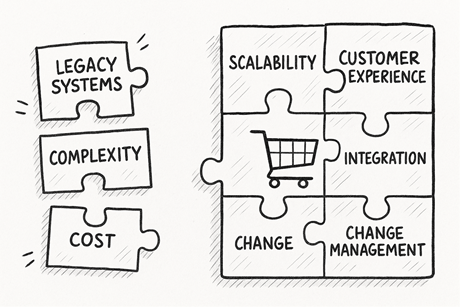
RfPs are not the problem. In fact, done right, they’re a great way to explore the market and find the right fit. They stop working when they turn into laundry lists - packed with questions, requirements, and an overwhelming number of vendors. Organizations overestimate the value of scale and underestimate the value of depth.
Lessons I’ve learned:
• A smaller, well-structured shortlist leads to deeper insights.
• Scoring sheets help - but chemistry, clarity, and collaboration matter too.
• Spending a day working together beats reading a 50-page RfP response.
The classic paradox. It comes from how you're organized. Of course the obvious answer is: it's both. Without balance, it won't work: IT-led projects often lack business adoption. Business-led ones miss technical depth.
Lessons I've learned:
• Digital change isn’t “just IT” or “just business” - it’s shared ground.
• If you get outside help (an SI or agency), make a joint team: keep knowlegde in your team.
• Get stakeholders from important departments involved early, and continuously.

Do you go for the large agency group that can do it all, but may not be a specialist in any field? Or do you go for the smaller, more specialized agency that's a super expert but without the security of being a large company?
Lessons I've learned:
• Use large partners where process and scale are critical.
• Bring in smaller experts for innovation, speed, and depth.
• Too many partners = overhead. Too few = blind spots.
• Create joint teams, and include your own developer in those teams!
• Big doesn’t always mean better - and small doesn’t always mean fragile.
When replacing a CMS or e-commerce: how do I not disturb business as usual? The shop needs to stay open! In my years, I've found it's a matter of planning the right scope and coming up with a good migration plan.
Lessons I've learned:
• Don’t aim to change everything at once (even though tech champions may try to convince you they can achieve anything.)
• Use shadow deployment to test without disrupting the experience.
• Keep the customer-facing experience aligned, even when backend shifts.
• Make a plan on content migration early (you may need to clean up / rewrite it).
• Cherish your SEO rankings.